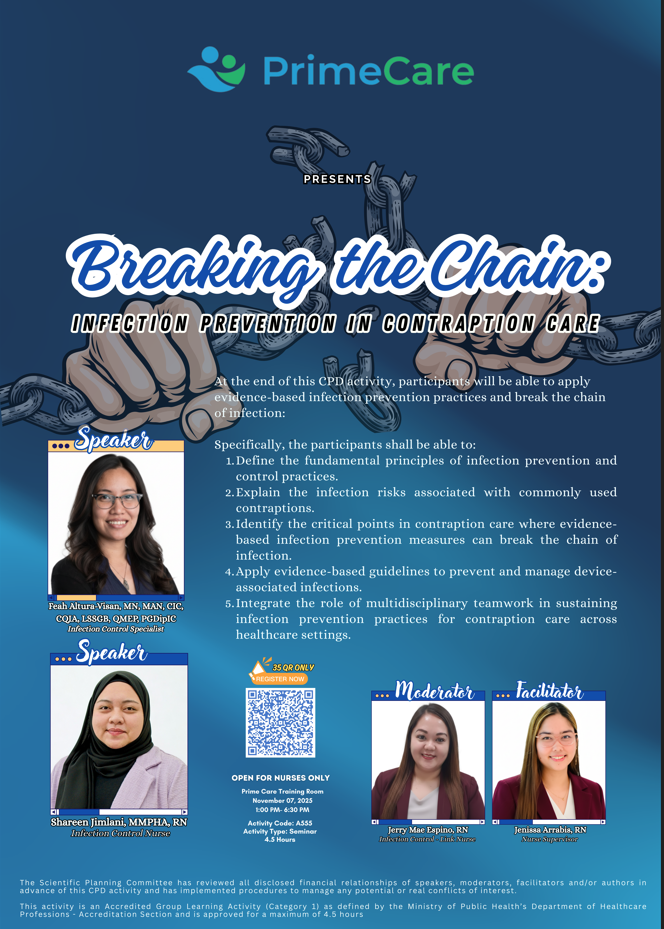
Shielding the Patient: Empowering Nurses in Qatar with Advanced Infection Control for Medical Contraptions
By: Nada Sattar, MN, RN
In the complex landscape of healthcare in Qatar, where both hospital and home-based care settings increasingly rely on medical contraptions (such as catheters, ventilators, and infusion pumps), the vigilance against healthcare-associated infections (HAIs) is paramount. Nurses, as the frontline caregivers, bear the direct and critical responsibility for managing these devices. A lapse in infection control practices related to contraption care can lead to serious patient morbidity, prolonged hospital stays, and increased healthcare costs. This is particularly pertinent in the growing home-care sector, where the environment is less controlled than a hospital. Therefore, continuous professional development (CPD) focusing on the latest evidence-based infection prevention strategies is not merely beneficial—it is an essential safeguard for patient well-being and a cornerstone of quality care delivery across all settings in Qatar.
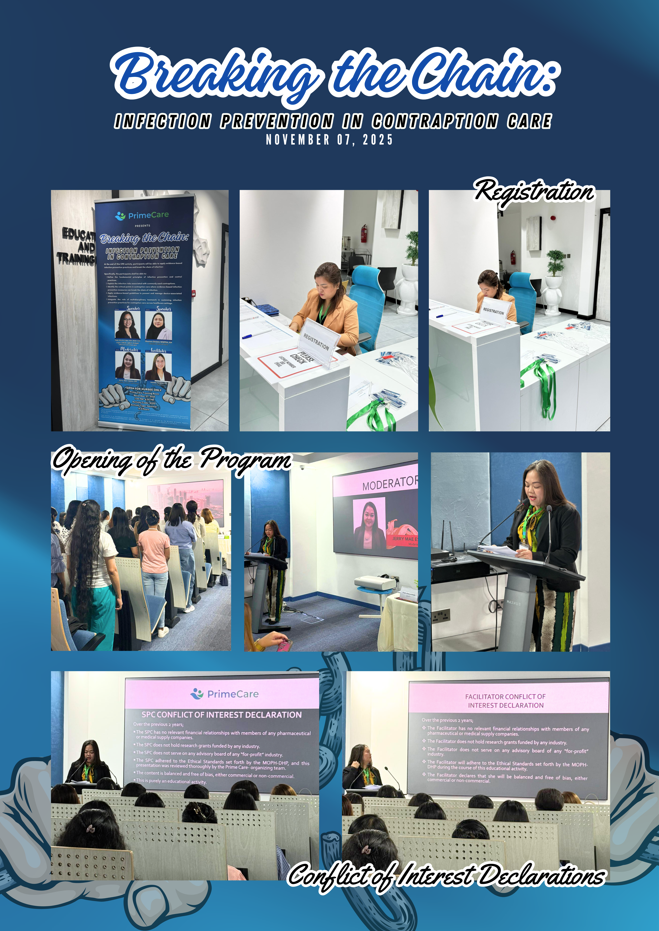
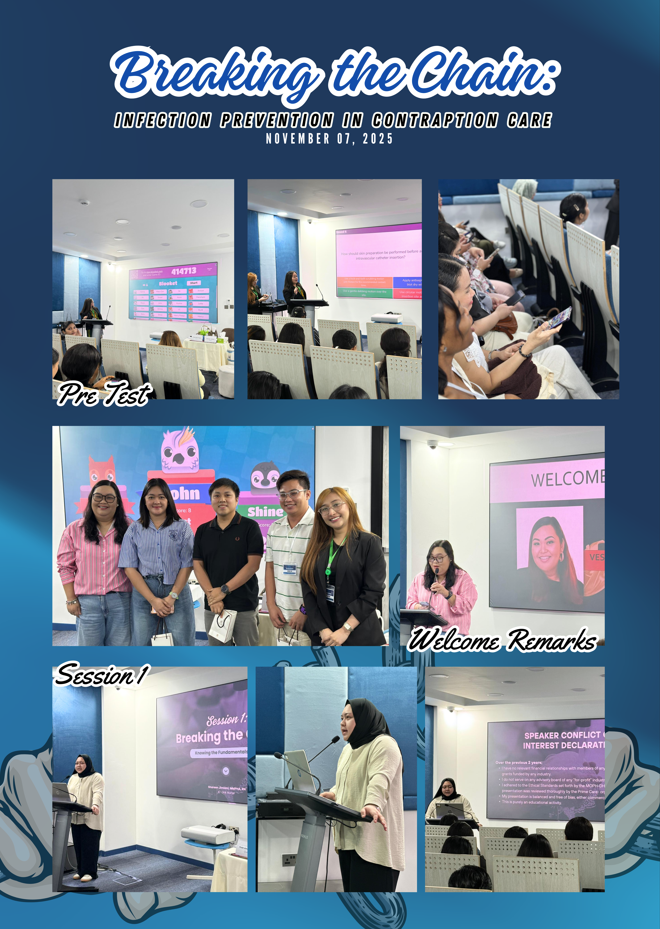
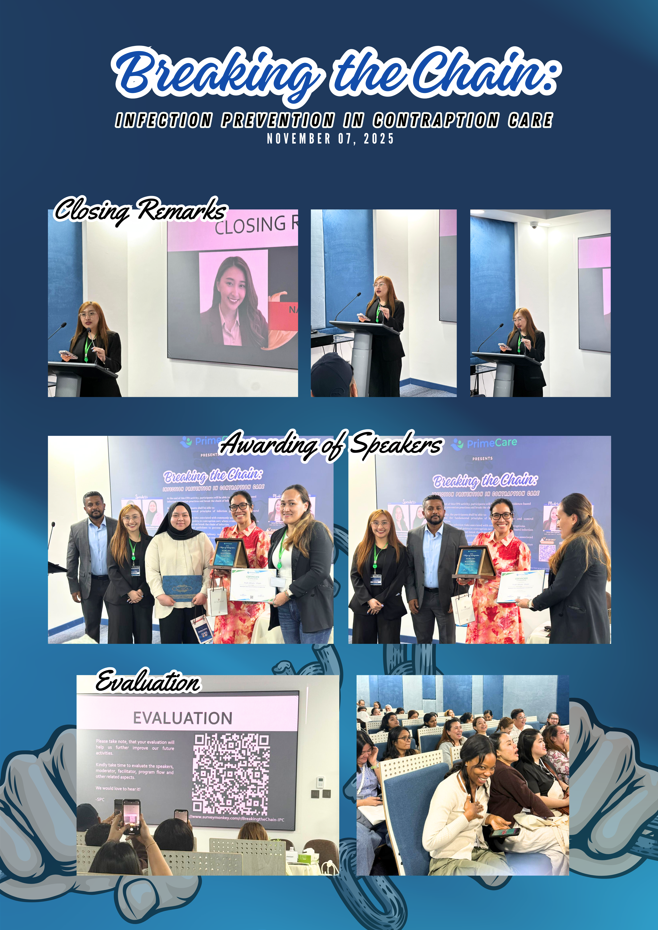
The CPD activity, “Breaking the Chain: Infection Prevention in Contraption Care”, was specifically designed to empower nurses with advanced knowledge and practical skills in this vital domain. Held on November 7, 2025, from 1:00 PM to 6:30 PM, the program aimed to ensure all participants could confidently apply evidence-based infection prevention practices and effectively break the chain of infection associated with medical devices. The program was structured to achieve five key objectives. The foundational session, led by speaker Shareen Jimlani, an Infection Control Nurse, focused on defining the fundamental principles of infection prevention and control practices. This set the stage for the subsequent, more specialized sessions.
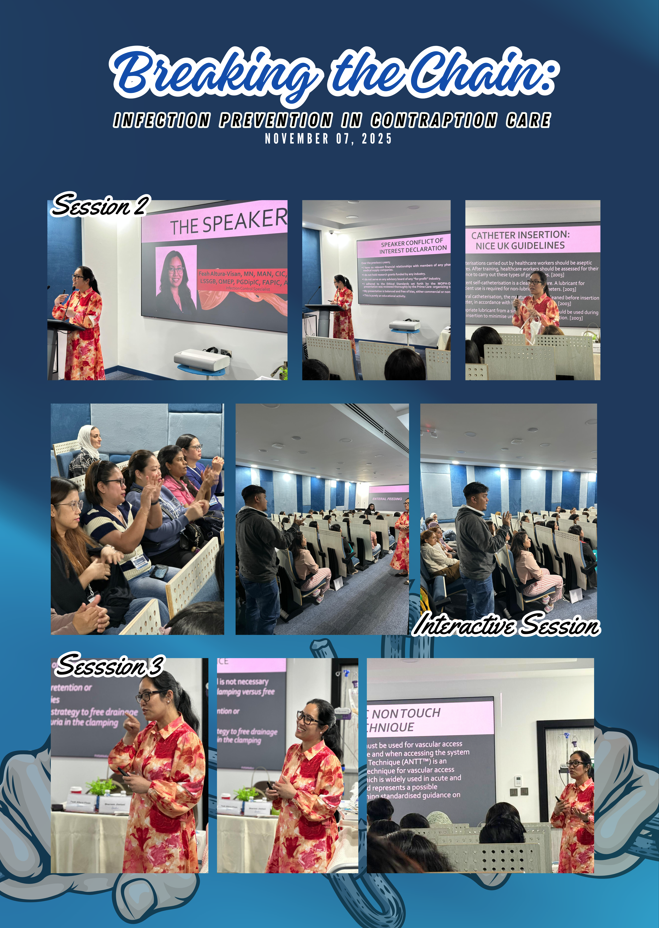
The core of the program, led by speaker Feah Altura-Visan, an Infection Control Nurse Specialist, delved into the specifics of device-related infection control. The second session focused on explaining the infection risks associated with commonly used contraptions and identifying the critical points in contraption care where targeted, evidence-based measures can effectively interrupt the chain of infection. This crucial analysis ensured nurses understood where and why interventions are most necessary. The third and final session transitioned from risk identification to practical strategy. Here, participants learned to apply evidence-based guidelines to prevent and manage device-associated infections, equipping them with actionable protocols for daily practice. The session concluded by emphasizing the importance of integrating the role of multidisciplinary teamwork in sustaining robust infection prevention practices for contraption care across various healthcare settings, underscoring that infection control is a shared institutional responsibility.
A defining feature of “Breaking the Chain” was its commitment to interactive learning. The theoretical knowledge imparted was immediately reinforced through practical engagement. Throughout the second and third sessions, Ms. Feah Altura-Visan incorporated comprehensive demonstrations that provided nurses with a hands-on view of correct device handling and sterile techniques. These interactive activities served to solidify the participants’ understanding and mastery of the complex procedures, adding significant practical knowledge before they left the venue. Ultimately, the CPD activity was a success, leaving the participating nurses with enhanced expertise and a renewed commitment to upholding the highest standards of infection prevention in all aspects of contraption care. Therefore, “Nursing is the heart of caring, and meticulous infection control is the shield that protects that care.”
Gallery